Skip to content
IPAC Logo

Euclid: An ESA Mission With NASA Participation

Studying the Geometry and Nature of the Dark Universe

Euclid and ENSCI

Euclid is a European Space Agency (ESA) space mission with NASA participation, to study the geometry and nature of the dark Universe. Euclid will carry out a six-year survey of a third of the sky in the optical and near-infrared. It will measure galaxies out to distances corresponding to a look-back time of ~10 billion years. Euclid was launched on July 1, 2023. Well-characterized and validated Euclid data will be publicly released within about 2 years of acquisition.

Euclid NASA Science Center at IPAC (ENSCI) has been established by NASA, in order to support US-based investigations using Euclid data. ENSCI is part of the Euclid Consortium’s Science Ground Segment, providing algorithm and software development, participating in data quality assurance, and performing data processing. In addition, ENSCI supports the US research community by providing expert insight into the Euclid surveys, data processes, calibration, and products.

Latest News

ESA’s Euclid captures the Milky Way’s crowded heart

June 24th, 2026

The largest and most detailed photo ever made of our Milky Way galaxy’s centre in visible light is revealed today by the European Space Agency’s Euclid mission. Packed with more than 60 million...
ESA’s Euclid captures the Milky Way’s crowded heart

Euclid at AAS in Pasadena

June 10th, 2026

Learn more about Euclid at AAS #248 meeting on June 14-18, 2026 in Pasadena! ENSCI workshop is on Sunday, Euclid special session is on Thursday.
Euclid at AAS in Pasadena

Euclid Citizen Science: Space Warps

May 8th, 2026

A new Euclid citizen science project, Space Warps, has been launched on the Zooniverse platform! You can join to help find strong gravitational lenses in the Euclid data.
Mosaic of gravitational lenses from the first observations of the Euclid Deep Fields, each showing multiple images of a galaxy from the bending of light due to gravitational lensing.

Euclid Science

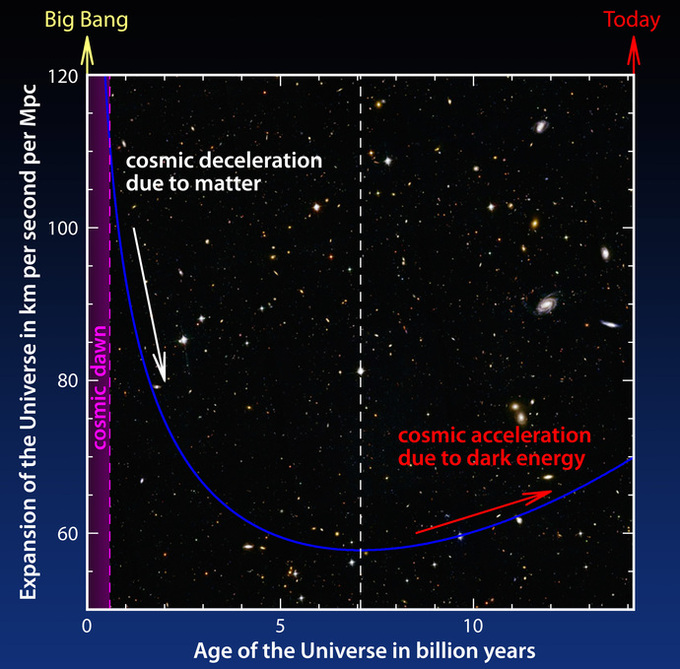
Our Universe is undergoing an accelerated expansion. Since matter gravitates, cosmic expansion would slow down in a matter-dominated universe. Thus the unknown nature of the observed cosmic acceleration has been dubbed “dark energy”. Euclid will map the large-scale structure of the Universe over ~15,000 square degrees, nearly half of the full sky excluding the regions dominated by the stars in our Milky Way galaxy. It will measure galaxies out to distances which corresponds to a look-back time of ~10 billion years, covering the period over which dark energy accelerated the expansion of the Universe.

Learn more
Graph of the universe’s expansion rate decreasing after the Big Bang, then increasing again due to dark energy as the universe ages.

Euclid Science

Our Universe is undergoing an accelerated expansion. Since matter gravitates, cosmic expansion would slow down in a matter-dominated universe. Thus the unknown nature of the observed cosmic acceleration has been dubbed “dark energy”. Euclid will map the large-scale structure of the Universe over ~15,000 square degrees, nearly half of the full sky excluding the regions dominated by the stars in our Milky Way galaxy. It will measure galaxies out to distances which corresponds to a look-back time of ~10 billion years, covering the period over which dark energy accelerated the expansion of the Universe.

Learn more
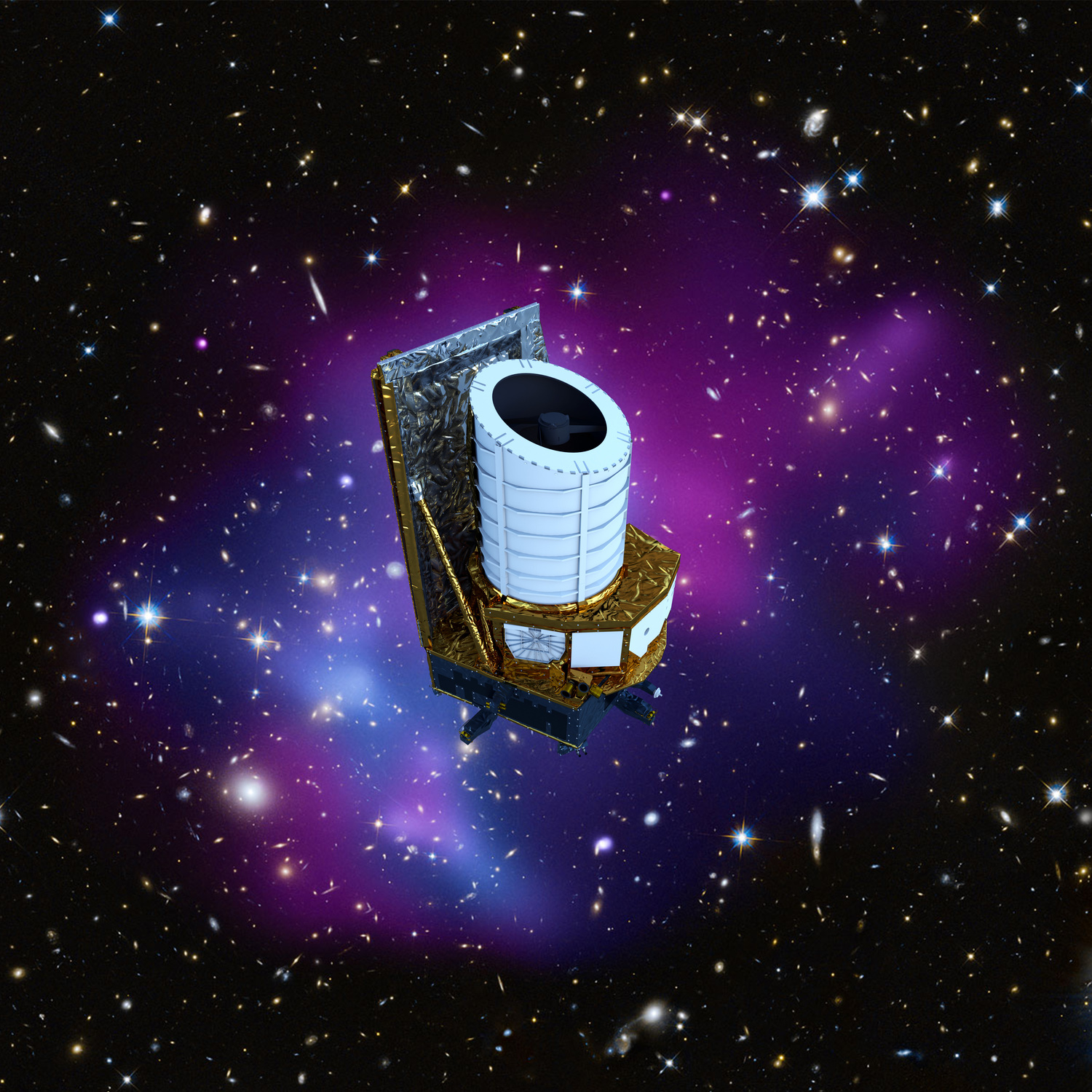
Euclid space telescope floating in front of a deep-field view of galaxies, stars, and purple-blue cosmic gas.

Euclid Mission

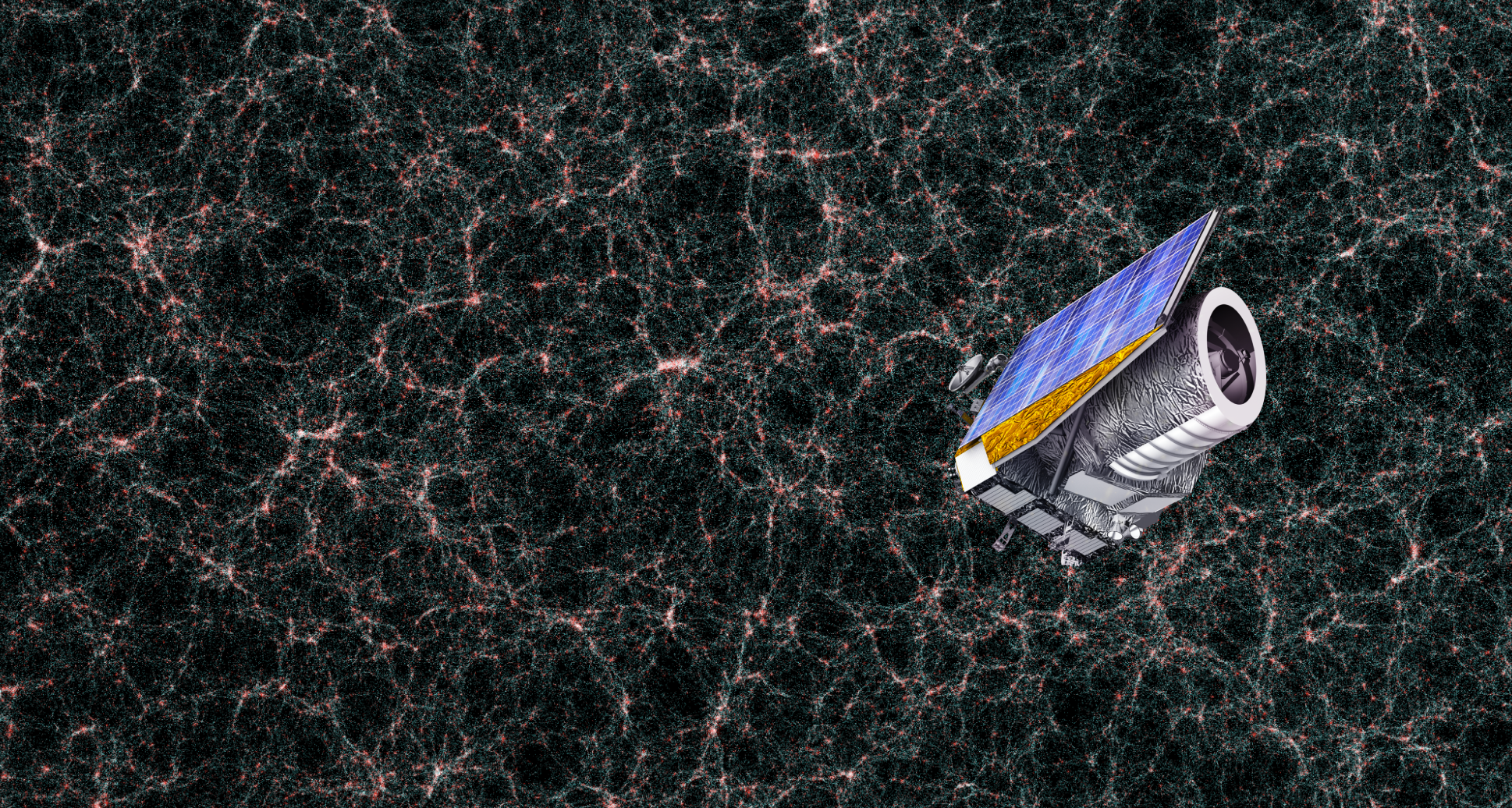
Euclid is an ESA space mission with NASA contribution. It will study the geometry and nature of the dark Universe. Euclid will carry out a 6 year survey of ~1/2 of the extragalactic sky in the optical and near-infrared, accurately measuring shapes for ~1.5 billion galaxies, and redshifts (i.e., distances) of ~30 million galaxies. All data will be released to the world-wide community within about 2 years of acquisition.

Learn more

Euclid Data

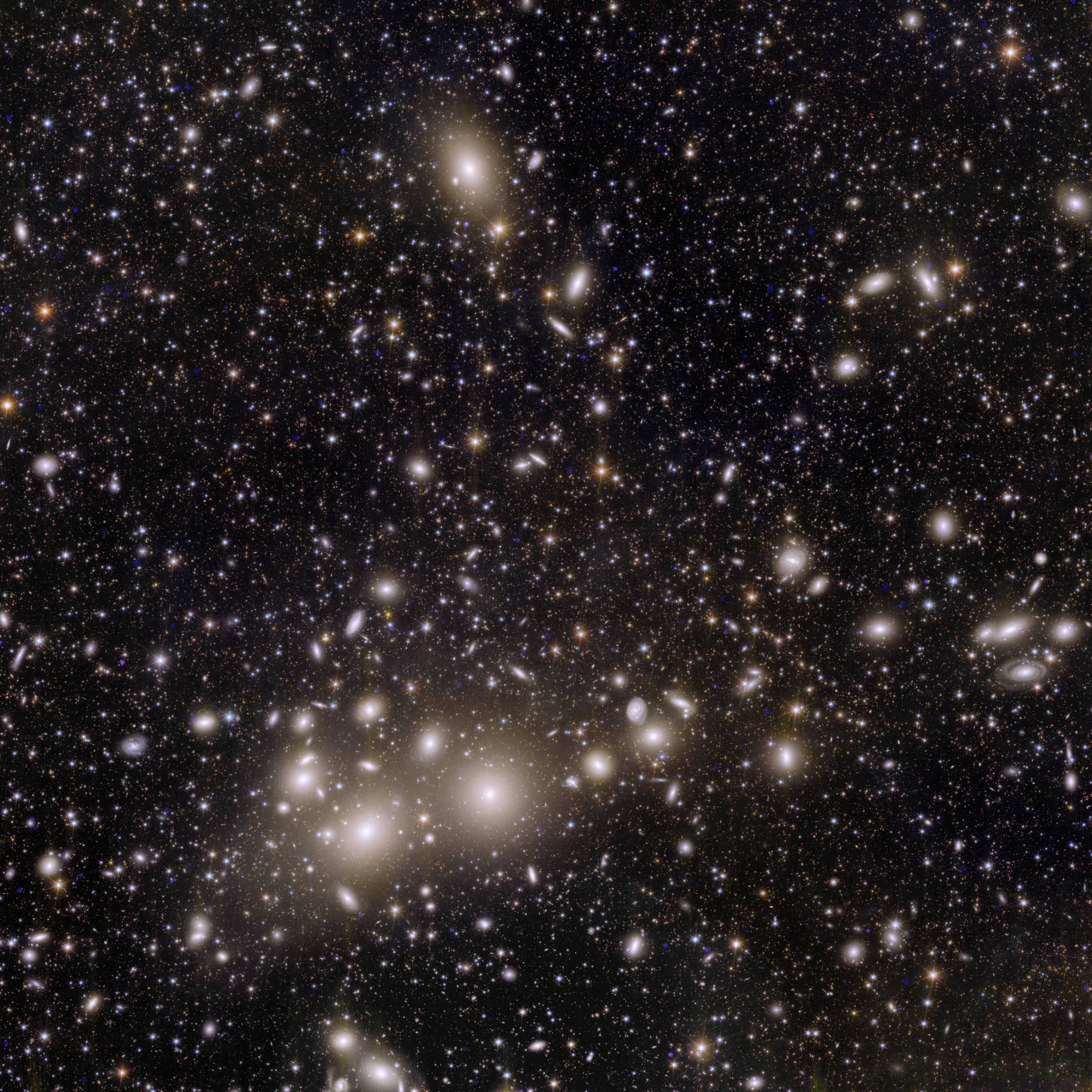
All Euclid data will be made public in three major data releases (DR1, DR2, DR3), phased with the survey progress, with the final DR3 a year after the end of the main survey. Preceding each major DR are “quick releases” (Q1, Q2, Q3, Q4) of selected areas and data-products, to demonstrate the data to be expected, and to allow scientists to sharpen their data analysis tools. Well-characterized and validated data will be released via ESA’s Euclid Science Archive System, and by the NASA/IPAC Infrared Science Archive.

Learn more
Thousands of galaxies across the black expanse of space. The closest thousand or so galaxies appear as small disks of spiraling material, surrounded by halos of yellow and white light.

Euclid Data

All Euclid data will be made public in three major data releases (DR1, DR2, DR3), phased with the survey progress, with the final DR3 a year after the end of the main survey. Preceding each major DR are “quick releases” (Q1, Q2, Q3, Q4) of selected areas and data-products, to demonstrate the data to be expected, and to allow scientists to sharpen their data analysis tools. Well-characterized and validated data will be released via ESA’s Euclid Science Archive System, and by the NASA/IPAC Infrared Science Archive.

Learn more